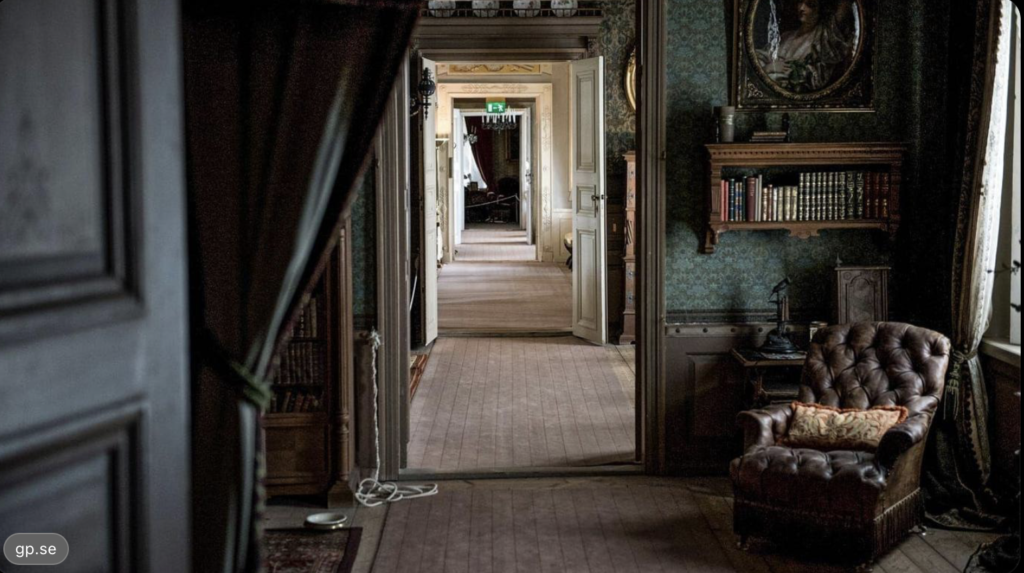
When history, architecture, and the supernatural meet the real estate market.
Would you buy a house where someone had died? What about a property where previous residents claimed to hear footsteps in empty rooms? And would such a reputation make you negotiate a lower price — or perhaps pay more?
In real estate, we often hear that three things matter most: location, location, location. Yet some properties have gained worldwide attention for something far less tangible – their past.
In some cases, ghost stories have transformed ordinary buildings into profitable tourist attractions. In others, they have frightened potential buyers away. There has even been a case where a property’s haunted reputation became the subject of a legal dispute.
This Halloween, we explore some of the world’s most mysterious properties, uncover the legends hidden behind Riga’s historic façades, and ask an intriguing question: Can ghosts actually influence real estate value?
1. The house that was legally declared haunted
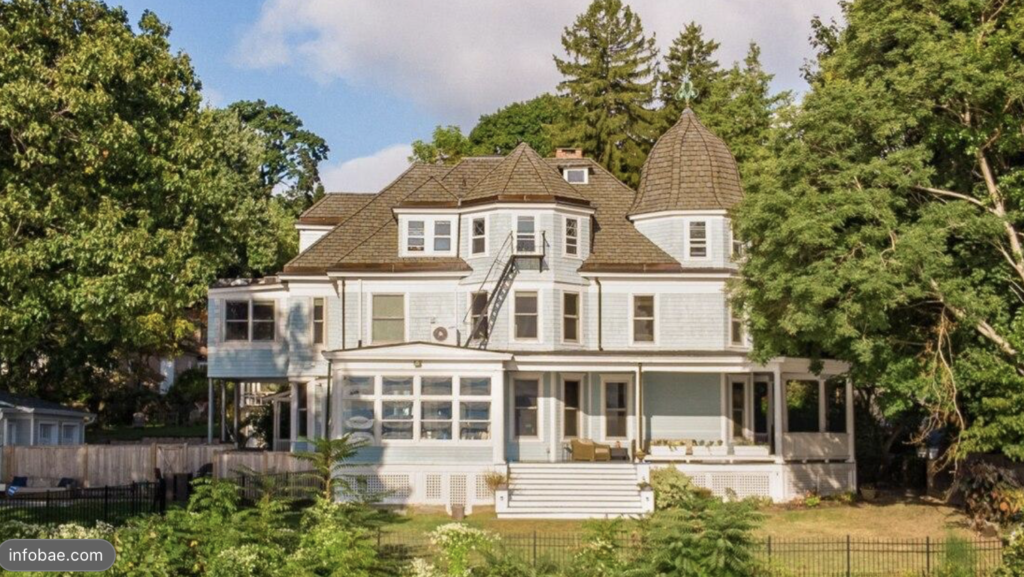
Nyack, New York, USA | The Ackley House
Imagine finding your dream home — a beautiful Victorian mansion overlooking the Hudson River, with elegant architecture and plenty of character.
Everything seems perfect until you discover that the previous owner has publicly claimed the property is haunted.
This is precisely what happened to Jeffrey Stambovsky in the late 1980s.
After agreeing to purchase a historic house in Nyack, New York, Stambovsky discovered that the seller, Helen Ackley, had repeatedly shared stories about supernatural encounters inside the property.
According to Ackley, several friendly spirits lived in the house, including one resembling Santa Claus.
The buyer was not amused.
Feeling that important information had been withheld, Stambovsky attempted to cancel the purchase agreement. The dispute eventually reached the New York courts.
In 1991, an appellate court delivered an extraordinary ruling. Because the seller had publicly promoted the property’s haunted reputation, the court treated the house as legally haunted for the purposes of the dispute.
The ruling did not establish that ghosts exist. Instead, it recognized that a property’s reputation could materially affect a buyer’s decision. The court allowed the buyer to pursue rescission of the contract.
The real estate lesson? Sometimes, what people believe about a property can be almost as important as the physical property itself.
2. Winchester mystery house: the mansion that was never finished
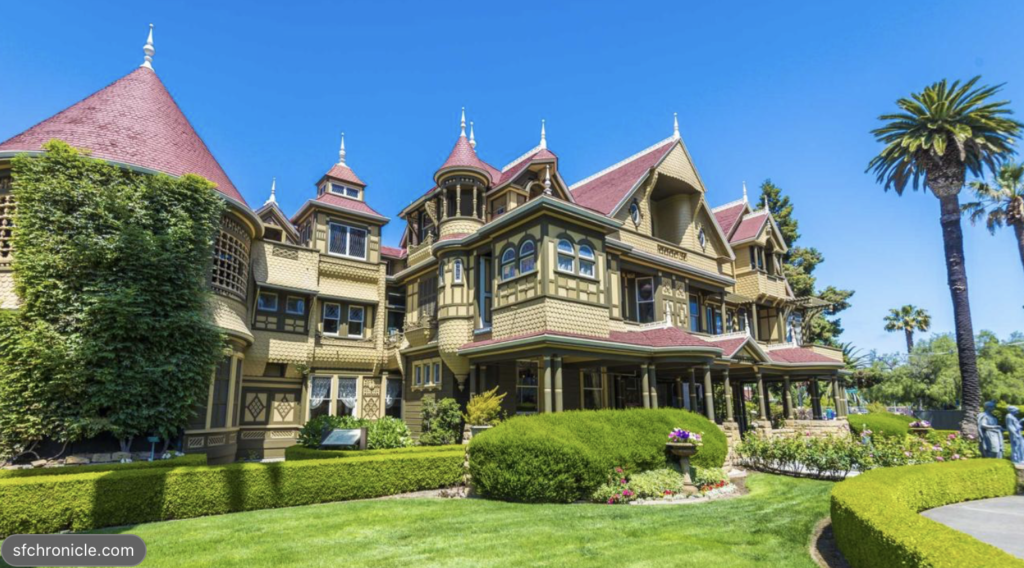
San Jose, California, USA | Winchester Mystery House
What happens when extraordinary wealth, architectural ambition, and a mysterious family history come together?
The result might be one of the strangest houses ever built.
In 1886, Sarah Winchester, heiress to the Winchester firearms fortune, purchased a modest farmhouse in California.
Over the following 36 years, the property underwent continuous expansion and transformation.
The finished mansion contained approximately 160 rooms, dozens of staircases, thousands of windows, and architectural features that continue to puzzle visitors.
Some staircases lead directly into ceilings. Certain doors open onto walls or unexpected drops. Corridors twist through the building in seemingly illogical directions.
According to a popular legend, Sarah believed she was being haunted by the spirits of people killed by Winchester rifles.
A spiritual adviser supposedly told her that construction must never stop if she wanted to escape their revenge.
However, historians have found no convincing evidence that this supernatural explanation was Sarah’s actual motivation. Her fascination with architecture and decades of renovations offer a more grounded interpretation.
Construction ended after her death in 1922.
Today, the Winchester Mystery House is a famous tourist attraction.
And here lies the fascinating real estate paradox: architectural irregularities that might reduce the appeal of an ordinary residential property have become the mansion’s greatest commercial advantage.
3. The hotel that inspired one of the world’s most famous horror stories
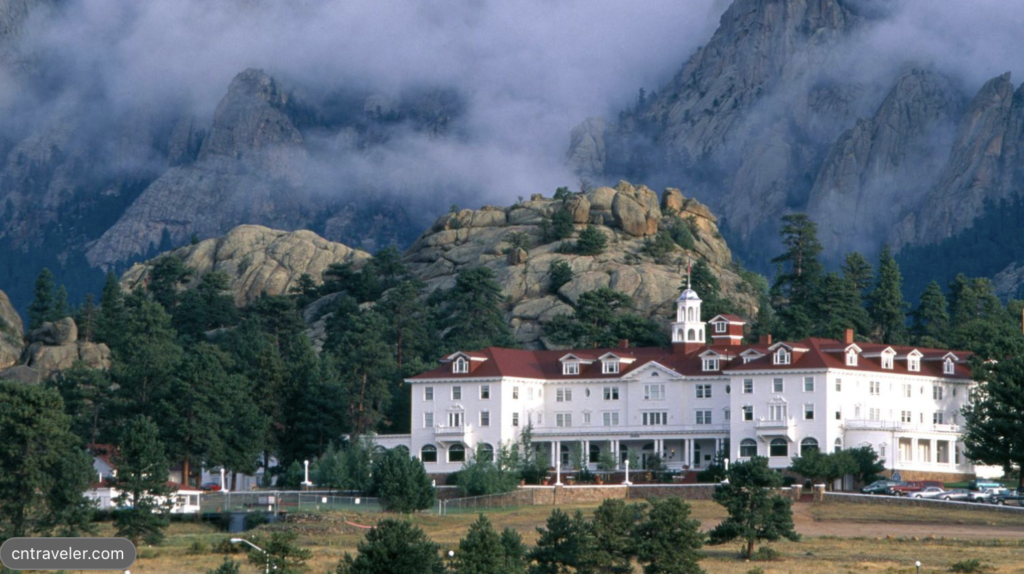
Estes Park, Colorado, USA | The Stanley Hotel
In September 1974, author Stephen King and his wife arrived at the historic The Stanley Hotel in Colorado.
The hotel was preparing to close for the season, and they were its only guests.
Picture the atmosphere: an enormous historic hotel, empty corridors, a silent dining room, and mountains rising beyond the windows.
During the night, King experienced a terrifying dream involving his young son running through the hotel’s corridors, pursued by a fire hose.
The experience helped inspire his famous novel The Shining.
The hotel later became closely associated with horror literature and supernatural tourism.
Visitors are drawn not simply by the accommodation, but by the opportunity to experience a place connected to a legendary story.
From a real estate perspective, this demonstrates something remarkable.
People are sometimes willing to pay not only for a room, but for the story and experience that come with it.
4. Riga castle: does the latvian president share the residence with ghosts?
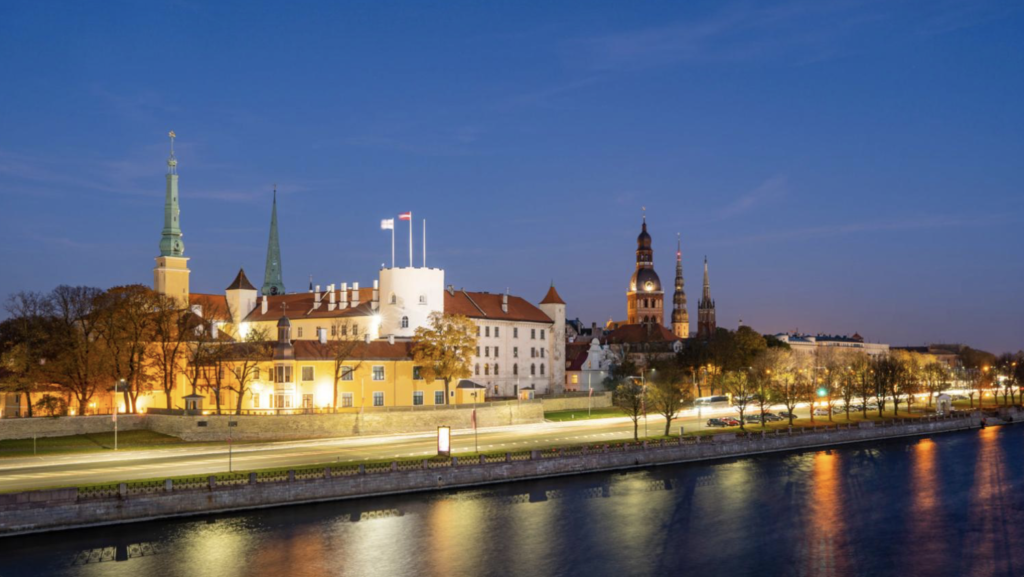
Riga, Latvia | Pils laukums 3
You do not need to cross the Atlantic to find mysterious real estate.
Riga, a city with more than 800 years of history, has its own collection of supernatural legends.
One of the most intriguing is associated with Riga Castle, the official residence of the President of Latvia.
According to local folklore, a mysterious figure known as the Blue Lady has been seen wandering through the castle.
Other stories involve unusual sounds in empty rooms, moving furniture, and historic portraits that supposedly change position overnight.
One particularly curious legend concerns a portrait of Dorothea, Duchess of Courland.
According to the tale, when other portraits were placed in the same room, they were later found hanging crookedly, as though Dorothea disapproved of sharing the attention.
Naturally, there is no verified evidence of supernatural activity.
However, the legends reveal something interesting about historic buildings.
When a property has witnessed centuries of political events, changing rulers, personal tragedies, and dramatic historical moments, its architecture becomes inseparable from the stories surrounding it.
And sometimes, those stories are just as memorable as the building itself.
5. The headless red cardinal of riga’s historic museum
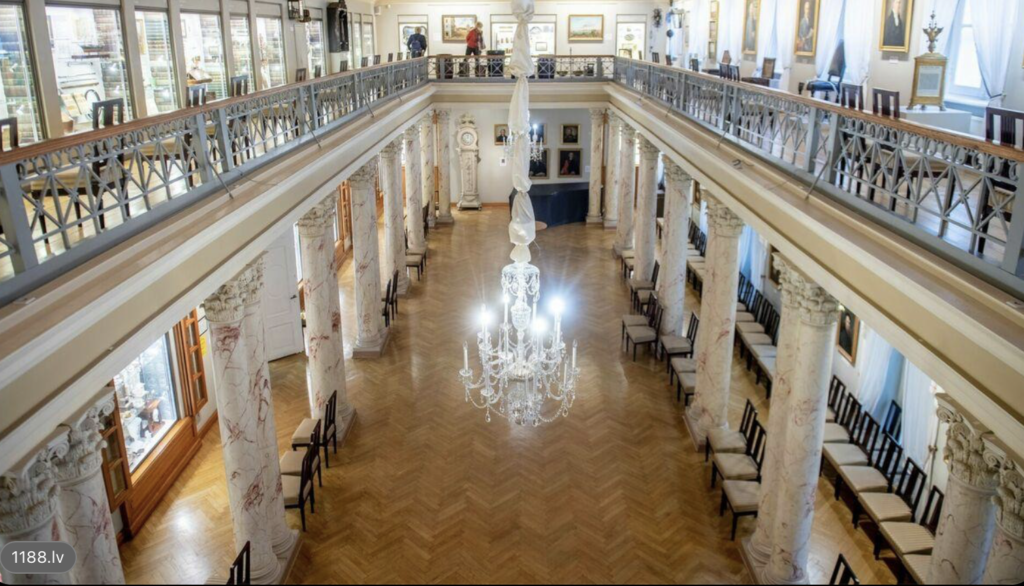
Riga, Latvia | Palasta iela 4
Imagine working late inside a centuries-old museum.
The visitors have left. The corridors are silent. You are preparing to close the building when a figure in a red velvet cloak appears near a wall.
There is just one disturbing detail.
The figure has no head.
This is the legend of the Red Cardinal, one of the mysterious characters associated with the Museum of the History of Riga and Navigation.
According to accounts preserved in local folklore, the figure has occasionally been seen moving through the museum’s historic rooms.
The building itself forms part of the Riga Cathedral complex, an area with centuries of religious, political, and cultural history.
The surrounding grounds also have a long association with burials.
Whether the Red Cardinal is a supernatural presence, a story passed down through generations, or simply an imaginative interpretation of the building’s atmosphere remains unknown.
What is certain is that such legends add another layer to the visitor’s experience.
A historic building becomes more than a collection of walls and exhibits. It becomes a place where the past feels unusually close.
6. Why do old buildings feel haunted?
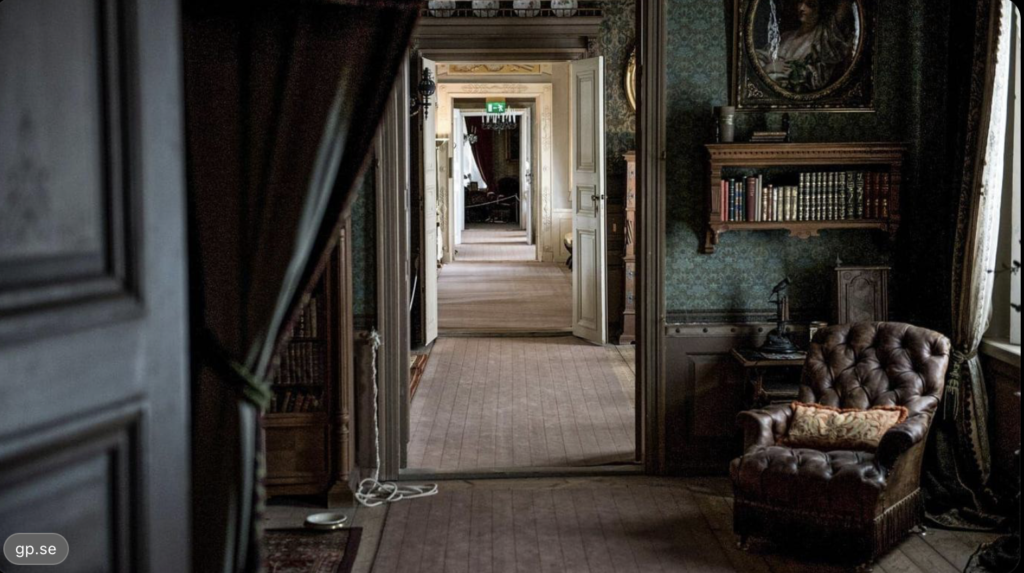
Interestingly, many ghost stories share similar details.
Footsteps in empty rooms. Doors opening unexpectedly. Sudden cold spots. Strange shadows. The feeling of being watched.
But historic buildings have characteristics that can explain many of these experiences.
Wooden structures expand and contract as temperature and humidity change. Old heating systems produce unfamiliar noises. Air pressure differences can cause doors to move. Poor sound insulation can make distant footsteps seem surprisingly close.
Psychology also plays an important role.
When someone enters a building after being told it is haunted, they may become more alert to ordinary sounds and visual details.
The brain constantly interprets incomplete information, and expectations can influence what we believe we are experiencing.
In some situations, environmental hazards such as carbon monoxide exposure can also cause confusion and perceptual disturbances. Unusual symptoms inside a property should therefore always be investigated from a safety perspective first.
Perhaps the most fascinating aspect of haunted buildings is not the possibility of ghosts, but the extraordinary influence architecture and atmosphere can have on human perception.
7. Can a haunted reputation increase property value?
This is where supernatural legends become particularly interesting from a real estate perspective.
Imagine two almost identical historic properties.
Both have beautiful façades, restored interiors, high ceilings, and excellent locations.
But one comes with a centuries-old legend about a mysterious former resident who still appears in the upstairs windows.
Which property would be worth more?
The answer depends largely on the potential buyer and the intended use.
For a traditional residential buyer, a disturbing reputation might be a disadvantage.
For a boutique hotel, museum, historic attraction, or hospitality business, however, a mysterious story could become a powerful marketing advantage.
Winchester Mystery House and The Stanley Hotel demonstrate how unusual histories can become part of a successful commercial identity.
The Ackley House case, meanwhile, illustrates how a property’s reputation can complicate a real estate transaction.
This is an example of the intangible aspects of property value — reputation, cultural significance, emotional appeal, and historical identity.
Of course, a haunted reputation does not automatically increase market value. It can also narrow the pool of potential buyers.
In other words, a ghost story can be either a marketing asset or a commercial risk — even when no supernatural activity has ever been proven.
What about riga’s historic residential buildings?
Riga is home to remarkable historic architecture, particularly in the city centre and Quiet Centre neighbourhoods.
Many residential buildings feature ornate façades, impressive staircases, original architectural details, and ceilings that reflect the craftsmanship of another era.
These buildings offer something that newly constructed properties cannot reproduce: authentic history.
However, modern residential comfort depends on much more than architectural beauty.
Energy efficiency, reliable engineering systems, security, sound insulation, and professional property management all contribute to the quality of everyday life.
The most successful residential properties find a balance between preserving architectural character and meeting contemporary expectations.
At City Star, we believe that a property’s true value lies not only in its location or appearance, but also in the experience it provides to the people who live there.
Every property has a past. The question is what we do with It.
The world’s most famous haunted houses demonstrate that real estate value cannot always be measured in square metres alone.
Sometimes, value comes from history. Sometimes, from architecture. And occasionally, from a legend that has survived longer than the people who once lived there.
Perhaps this is why historic properties continue to fascinate us.
They offer something that cannot simply be constructed again: an authentic connection to the past.
At City Star, we appreciate the individual character of every property while focusing on what matters most today — creating comfortable, secure, and welcoming homes.
Because no matter how entertaining ghost stories may be, most of us would still prefer to be the only permanent residents of our homes.
Let the mysteries remain part of history, and let homes be places for living.
Happy Halloween from City Star! 🎃