The year 2025 promises significant changes in the real estate industry. Advancements in technology, sustainability principles, and new approaches are making the sector more modern and tailored to client needs. Here are some key innovations to look forward to in the near future:
1. Smart Home Technologies
Smart home systems continue to gain popularity and are being integrated into new projects:
- Energy Efficiency: Automated lighting, heating, and cooling systems reduce energy consumption.
- Voice Control and Artificial Intelligence: Smart devices that respond to commands to enhance daily living.
- Security Technologies: Video surveillance, biometric access, and alert systems.
Example: “Amazon Alexa” integration in luxury apartments in the U.S. provides voice control, connected security systems, and energy-efficient devices, giving residents full control over their living space. In London, projects featuring smart windows that automatically adjust to light intensity and temperature are being developed. For instance, “SageGlass” has introduced electrochromic windows used in several office building projects in London, ensuring energy efficiency and comfort for residents. Source: SageGlass official website. Source: Amazon official website
2. Modular and 3D-Printed Construction
Modern construction methods are revolutionizing the industry:
- 3D Printing: Using 3D printers to create architecturally complex elements with minimal material waste.
- Modular Approach: Construction from pre-prepared modules, reducing time and costs.
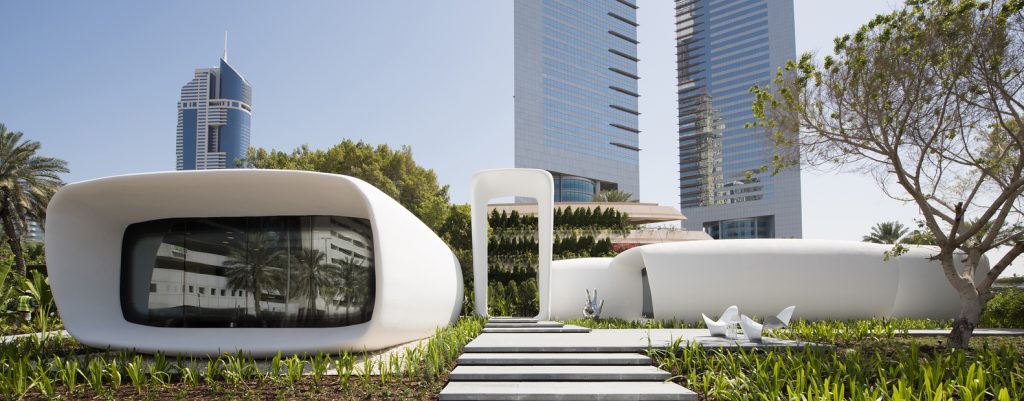
Example: The “Office of the Future” in Dubai is the world’s first fully 3D-printed office building, showcasing the potential of this technology. In China, multi-family homes were completed using modular construction in just 30 days. For instance, “Broad Group” executed the “Living Building” project, where modular methods allowed a 10-story building to be constructed in 28 hours, demonstrating efficiency and speed. Source: Broad Group website Source: ArchDaily
3. Sustainable Solutions
Environmental concerns continue to dominate:
- Net-Zero Buildings: Structures capable of producing the same amount of energy they consume.
- Green Technologies: Vertical gardens, rainwater harvesting systems, and eco-friendly materials.
- Energy Sharing Networks: Using solar and wind energy within communities.
Example: “Bosco Verticale” in Milan is one of the first high-rise residential projects with integrated vertical gardens, reducing CO2 levels and improving air quality. In Sweden, entirely wooden high-rise buildings are being developed to minimize concrete use. For example, the “Sara Kulturhus” project in Skellefteå has become one of the world’s tallest wooden buildings, demonstrating the possibilities of sustainable construction. Source: Dezeen Source: Stefano Boeri Architetti
4. Virtual and Augmented Reality (VR and AR)
Technologies opening new opportunities in the market:
- Virtual Tours: Potential buyers and renters can view properties remotely.
- Interior Design Simulation: AR tools help plan furniture placement and color schemes.
Example: The “Matterport” platform provides full 3D property tours, allowing real estate buyers to virtually explore properties before physical visits. Startups in San Francisco offer AR solutions to visualize how specific furniture would look in a living room before purchase. For instance, the company “Houzz” has developed an app with augmented reality functionality, enabling users to place virtual furniture in real spaces to help plan interiors. Source: Houzz official website Source: Matterport official website
5. Blockchain Technology
Blockchain technology ensures security and transparency:
- Digital Contracts: Automated contract execution and payment processes.
- Investment Opportunities: Real estate tokenization enables small investments in large projects.
Example: The “Propy” platform facilitates real estate purchases using blockchain, making the process fast, secure, and efficient. In Spain, complete transactions using cryptocurrencies and blockchain technology significantly accelerate legal procedures. For instance, the “Propy” real estate platform has executed several transactions, including property purchases in Barcelona, demonstrating the advantages of simplifying legal procedures through technology. Source: Propy website Source: Propy website
6. Artificial Intelligence Management
Artificial intelligence enhances the efficiency of real estate management:
- Data Analysis: AI systems predict market trends and optimize pricing strategies.
- Automated Solutions: Payment reminders, tenant selection, and property maintenance.
Example: “Zillow AI” predicts housing prices and helps homeowners determine the best times to sell. In Singapore, artificial intelligence monitors building conditions and automates maintenance planning. For instance, “JTC Corporation” has implemented AI systems for managing industrial buildings, ensuring early detection of damages and efficient maintenance planning. Source: JTC official website Source: Zillow Research
7. Self-Sustaining Communities
A concept combining sustainable living and technology:
- Community Energy Systems: Residents share produced energy.
- Vertical Farming: On-site food production.
Example: “Masdar City” in the United Arab Emirates is the world’s first fully sustainable city, combining renewable energy and cutting-edge technologies. In the Netherlands, city districts are being developed with fully equipped rooftop gardens and solar energy systems. For example, the “De DakAkker” project in Rotterdam is one of Europe’s largest rooftop gardens, growing vegetables and fruits while helping reduce the city’s “food footprint.” Source: De DakAkker official website
Conclusion
The year 2025 marks a rapid transformation in the real estate industry. Innovative technologies such as artificial intelligence, 3D printing, and blockchain solutions make the sector more efficient, sustainable, and adapted to modern needs. Additionally, there is a growing focus on environmental protection and sustainability, driving the development of self-sufficient communities and energy-efficient buildings. These trends not only reshape the real estate industry but also influence the global economy and quality of life, creating opportunities to live more eco-friendly and technologically advanced lives.